III
This iteration contains: winter in the living city, virgins tortured by emperors, and why I write about executioners.

New York City sleeps under the snow. It’s been like this for over a week now: every time the drifts start to become that local delicacy of mud and ice, the slate sky opens up again and we get hours of snowfall. I know people are tired of it, but I adore the winters here, I always have. Even being a COVID anchorite hasn’t changed that. I want colder snaps, grayer days, a faster-whirling storm; the desert in me has never stopped being enchanted by every unlivable inch of it.
It’s also, incidentally, the perfect weather in which to experience this week’s perfume.
La Vierge de Fer, by Serge Lutens
This is a scent for martyrs. Very intentionally, given the name, but the notes itself actually pay off the promise. Lilies, an airily synthetic jasmine, and something metallic buried beneath. Something dark, crumbling, and oxidized. The lilies lend it an ecclesiastical air, but a nascent one. It’s a single visual: blossoms laid at the still-bloody instruments of torture after a saint is quartered and hung at the corners of the city. For snowfall over gore.
Pair with: a velvet plunging neckline, hidden beneath an endless scarf and the hood of your winter coat. the queen of swords tarot card. burgundy at the lashline, watery gloss on your eyelids. ducking into St. Thomas church on 5th Avenue to escape the cold, and brushing snow out of your hair as you slip into an empty, darkened pew, alone.
.
This has been a saint-heavy entry, so here is the first painting of a martyrdom that ever held me spellbound in a picture book: Saint Eulalia, by J.W. Waterhouse.
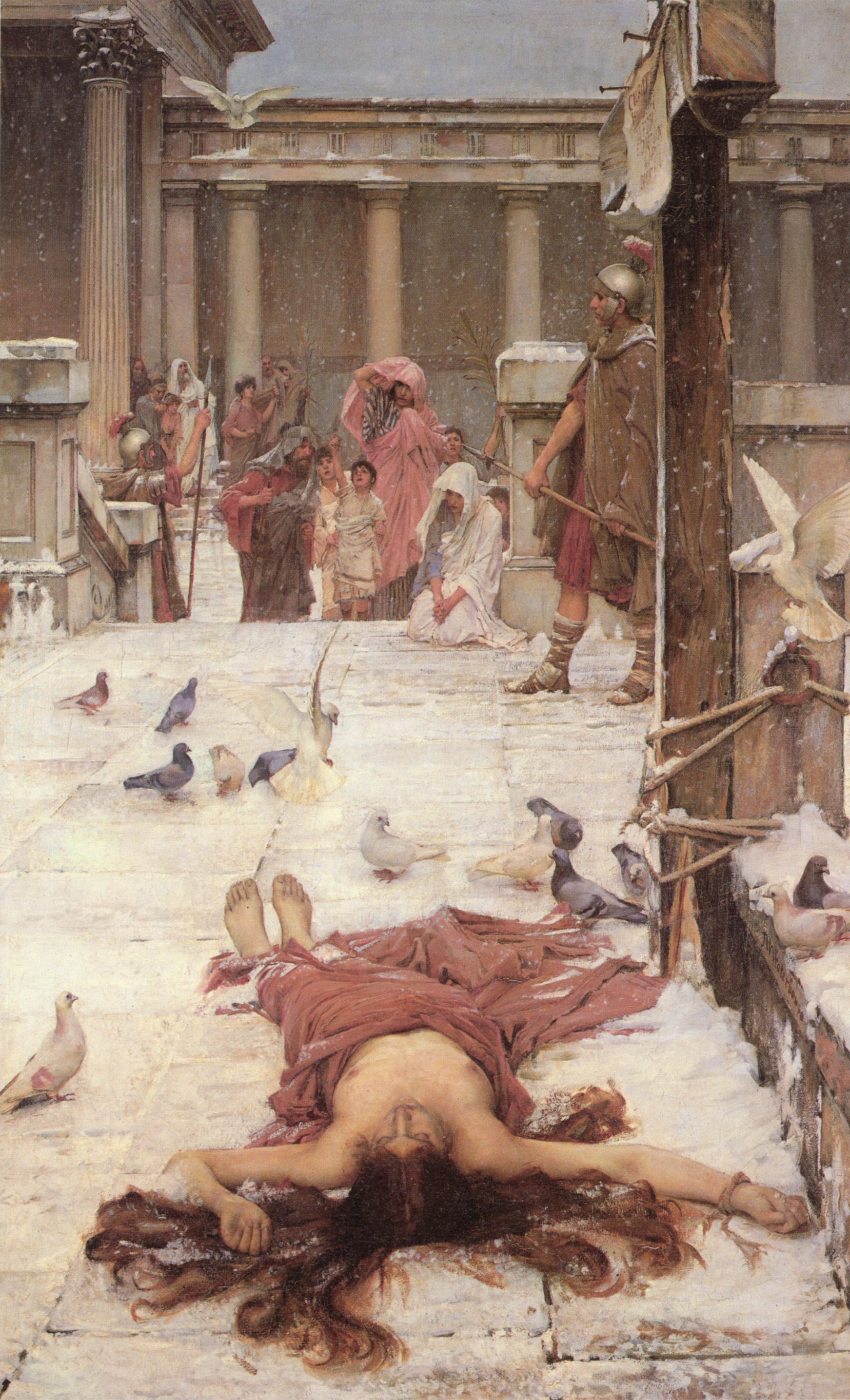
In college I taught a seminar session on the erotics of martyrdom, an avenue of study pioneered by Robert Mills in his Pain, Pleasure and Punishment in Medieval Culture. It concerns a certain sacred masochism, the tension between torment and holy release that only God could offer. It’s a fabulous book, I couldn’t recommend it more, but as I’ve gotten older, I’ve become more attracted to the aftermath of martyrdom, the second (and third and fourth and fifth) lives of relics - the smallness of a body after all that violence. That’s what I write about now, and what I think about when I look at images meant to inspire devotion: broken bodies blanketed with snow.
In Hilary Mantel’s Wolf Hall series, she returns over and over again to a public burning in her protagonist’s imagination, until the memory spirals and turns in on itself, revealing a new and more apocalyptic aspect every time. The only detail that holds, the center that remains, is the victim’s friends appearing in the night to scoop up the filaments of bone left in the ashes.
There’s something carnal in that, something brutal and yes, reliquary, for a given value of the word. It’s what I keep needling at in fiction, like a sliver of glass under my skin. What remains, or the man who swung the axe, or how grief becomes worship.
But none of that comes with any sort of eroticism. The fascination I found in Mills’s theories has ebbed, a bit. Funny how you don’t realize you’ve outgrown something until it’s already happened.